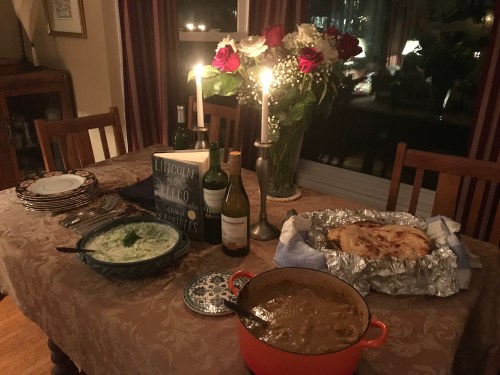
Educated by Tara Westover at Jeanne’s November 2018


Thursday November 8th, everyone was there except Bev for the discussion on Educated by Tara Westover. This was a last minute book change from the scheduled book “Born a Crime” by Trevor Noah. As always there was animated discussion and we were not shy about expressing our opinions. We all agreed that we are blessed to have grown up in a free country with a great education and opportunities for work, travel, and much more!!

Link from Laura:

I happened to listen to the latest This American Life podcast last night and one of the segments in the episode dealt with a Mormon practice I had not known of prior to this, concerning “chastity rules”. I wondered whether Tara Westover had submitted to this practice during her early adolescence, and if so, she overlooked mentioning it in her book but it definitely would have contributed to her being “Educated”. She would have had to have her Bishop’s signoff in order to get into BYU. I include the link below if you want to listen to it – segment 1 – The Old Man on My Shoulder.


New book reference from Moira:

Who doesn’t love a story about a woman overcoming incredible odds, not to mention  the power of education in elevating the poor. I read The Hillbilly Elegy a couple of years ago which was a similarly illuminating novel about a group known as “white trash” who are both unable and unwilling to change and who live where education seems inaccessible/unattainable – hard to believe in this day and age.

From Jeanne’s notes:

Summary and Interview with Tara Westover

Tara Westover was born in Idaho in 1986. Her father, Val, and mother, LaRee, raised five sons and two daughters (Tara is the youngest). Val, who is given the pseudonym “Gene” in the book, is a fundamentalist Mormon who has devoted his life to preparing for the End of Days. His paranoia took a turn for the worse in 1992 after the tragic and highly publicized incident at Ruby Ridge, Idaho.

At the center of that affair was a Christian fundamentalist named Randy Weaver, a U.S. Army veteran who had served in Vietnam, before settling with his wife and children at a remote farm in Idaho, in the American northwest. Like the Westover family, the Weavers believed in the imminent apocalypse, and tried to live independently of the authorities and be fully self-sustained.

During the 1980s, Randy Weaver attended rallies organized by extreme rightist organizations, among them such neo-Nazi groups as the Aryan Nations. In August 1992, the FBI raided Weaver’s home in search of illegal weapons. The raid went awry and FBI agents shot and killed Weaver’s wife Vicky and their 14-year-old son.

For Val Westover, the Ruby Ridge raid, which elicited harsh criticism of the government and the FBI, was a turning point. According to Tara, her father was convinced that his family was next in line. He believed with all his heart that the FBI intended to abduct his children, for the purpose of entering them in the public school system to “brainwash them.” Hence his decision to school them himself.

The education they received was based on a mix of racist beliefs and conspiracy theories. Val categorized the women in his world as either “saints” or “whores.” Westover relates in her book how her father and her brothers called her a “whore” when she rolled up the long sleeves of her blouse when working at the junkyard on a broiling summer’s day. Years later, when she registered for an introductory psychology course, she encountered the term “bipolar disorder” for the first time and realized to her astonishment that her father suffered from all the symptoms the lecturer described so drily, including paranoia and attacks of rage. She says that now she believes that all his life her father has suffered all from an undiagnosed psychiatric disorder.

“My dad was extreme about all of his views,” she tells me. “His mental irregularity was probably caused his religious extremism, and not the other way around. Everyone in my town was Mormon, and they went to the doctor and sent their kids to school.”

Indeed, the memories Westover describes in “Educated” are so shocking that it is easy to understand why her parents have done everything possible to refute them. Her childhood is described in an ambivalent way: On the one hand, she experienced the first years of her life as an attempt to survive in surroundings that were isolated and full of challenges (including preserving fruit and vegetables, and stockpiling equipment for an emergency that would help the family survive after the apocalypse). On the other hand, even today she emphasizes that in her childhood she was surrounded by family, wild nature and animals, and even today she stresses that her environment was fascinating and loving. She knew by heart every path and tree on the mountain that cast its shadow on the house, and before she reached the age of 10, she knew how to tame wild horses, dismantle a used car and prepare natural tinctures.

The idyll, however, crumbled quickly during her adolescence. Luke’s accident wasn’t the last one involving the children of the family, and that the parents tried to conceal from the authorities. The entire family was involved in a bad road accident but her father chose not to call the police because, not trusting insurance companies, he had never taken out insurance for himself, his children, or his car.

A few years later, another of the brothers, referred to by the pseudonym “Shawn” in the book, fell from a great height after losing his balance while trying dismantling some scrap metal. He suffered a concussion, but his father and his other siblings refused to call for medical assistance. The father just told him to take a break and come back to work.

About a quarter of an hour later, after Shawn had recovered a bit from the fall, he returned to the junkyard and started quarreling with his father and shouting at him. After he tried to shove his father, the two other brothers present attacked Shawn and beat him. He received another serious blow to his skull and lost consciousness.

In the book, Tara relates that eventually someone – though it is not clear who – decided to call for an ambulance. This was the first time in the family’s history that someone gave in to common sense and chose to ask for help. Since Shawn’s condition was grave and he was unconscious, the hospital closest to their home sent a rescue helicopter, a decision that probably saved his life.

According to Tara, Shawn was never the same after the injury. He became an aggressive, impatient and fanatical young man. His fits of violence became a heavy shadow over the lives of Tara and her sister. Ultimately, her parents’ choice to side with Shawn and completely deny his violent behavior is what made Tara feel she had to choose between them and her own sanity. This choice took up many years of her life, and even now, it seems like she has not yet come to terms with the severance of relations that was forced upon her. “Once I confronted them about Shawn, my parents tried to convince me that I was insane, and that my memories could not be trusted,” she tells me. “It was an attempt to control me.”

However, even this narrative is not as entirely unambiguous as it might seem. As Tara writes in “Educated,” at the age of 16 she wanted with all her heart to believe that it was the accident that caused her brother to become a monster capable of abusing her physically and mentally. The abuse continued throughout most of her adolescence: Shawn would curse his younger sister, hit her and shove her head into the toilet. In two separate incidents, he broke her wrist and her toe when she tried to resist.

But she has even earlier memories of abuse at the hands of Shawn, memories that call into question the relatively comforting belief that it was the head injury that caused his outbursts of violence. There is comfort in cause and effect, she writes, especially with regard to a continuing tragedy that is almost impossible to translate into words.

“When you love someone, you want to absolve them of responsibility for the bad things they have done,” she says. “It took me a long time to realize that you could do that if it makes you feel better, but that doesn’t change the decision you will have to make. So, with my dad, I feel like working with him in the junkyard was dangerous, and whether he was responsible for that doesn’t matter. If it turns out this is the result of bipolar disorder, it might make it easier for me – but it doesn’t change the fact that I wasn’t safe there.

“The question is not whether Shawn or my dad are malicious or evil. The question is what might have happened to me if I had stayed in these relationships. I think that there is a phase of bargaining that you go through when you’re trying to extract yourself from a toxic relationship, and a lot of that is going to be focused on the other person: whether they deserve having you leave them and so on. But a later, healthier, stage is to ask not whether they deserve it but whether I deserve it. If not – you need to get out whether they are responsible for it or mentally ill.”

Did you ever consider filing a police report against Shawn?

(Laughing bitterly:) “I grew up thinking the police were a part of the Illuminati. Calling them was never an option.”

After you told your parents about the abuse, Shawn threatened to murder you and placed a bloodied knife in your hand. He had access to guns, and he had butchered his dog and beaten his wife.

“I remember the night that he threw his wife out of the house,” says Westover, referring to an event that occurred when she was 18. “I remember vaguely thinking that it would be a good idea to call the police so she could have a record for her protection, in case she would want to leave him. But I didn’t want to question my dad’s decision.

“The funny thing is that every time I went back home, I returned to being their daughter. So something that might seem abnormal in any other context suddenly seemed normal again. I was back in a world where the police was never an option.”

Westover’s story raises difficult questions about the role of the authorities – which never bothered to probe why her parents took out a birth certificate for her only when she was 9 years old, never vaccinated her and insisted on schooling her at home. At the same time her story is an impressive and convincing defense brief for the higher-education system. Precisely at a time when anti-intellectualism has become a disturbing trend in America, Westover tells a Cinderella story of a lost girl who becomes a self-confident young woman thanks to her exposure to history, literature, philosophy and art.

She says the sole reason she was able to attend college was the help of her brother Tyler, who had taught himself mathematics and taken the college entrance exams secretly. After Tyler left home to study for his bachelor’s degree, he left his sister textbooks and encouraged her to take the standardized exams in mathematics, reading comprehension and written expression. Westover knew that her father would oppose this and therefore she had to study in secret at night, after exhausting days of working at the junkyard and in her mother’s improvised laboratory (“God’s pharmacy,” as her father called the family kitchen). Ultimately, she took the exams, received excellent scores and paid for her first year at Brigham Young by working the night shift in a grocery store in a nearby town.

The fact that she had never encountered the word “holocaust” wasn’t the only evidence of her unusual background. She had never heard of Napoleon, Martin Luther King or the civil rights movement. She had a hard time understanding an introductory history course until a friend explained to her that Europe is the name of a continent and not a country.

The more introductory courses and seminars she took, the more Westover realized that her father’s view of the world was extreme, distorted and very partial. When her parents came to visit her at college – for the first and last time – she took them to an Indian restaurant.

“We waited for the food, and Dad asked about my classes,” she writes in “Educated.” “I said I was studying French. ‘That’s a socialist language,’ he said, then he lectured for 20 minutes on 20th-century history. He said Jewish bankers in Europe had signed secret agreements to start World War II, and that they had colluded with Jews in America to pay for it. They had engineered the Holocaust, he said, because they would benefit financially from worldwide disorder. They had sent their own people to the gas chambers for money.”

When I ask Westover why she didn’t try to argue with her father even though she knew for certain that he was mistaken, she replies that she realized full well that she didn’t stand a chance of changing his mind.

“I’ve never tried to educate him, because it would just lead to a much longer lecture. There was one conversation I remember having with my dad, when he talked about the Founding Fathers, and said it [that is, the early years of the United States] was the most moral epoch in the history of mankind, and if only we could go back to that, everything would be so much better. I remember saying to him, ‘You mean, when women couldn’t vote or own property and you could legally rape a woman if she was black? Is that really our Golden Age?’ And that was the only time in which he kept quiet and thought about what I had said. He wasn’t willing to defend that argument.”

In the book, you write that there were some things in the unusual education you had from your parents that you are grateful for.

“That’s right. My parents believed that it was your responsibility to learn, and that you could teach yourself whatever you put your mind to. When I did get access to an education, in college, the idea that it was someone’s else responsibility to teach me would never have occurred to me.”

No blacks, no Jews

The ongoing success of “Education” has made Westover a reluctant star. In the months since it was published, she has been running from one news studio to the next, telling CNN about her years at Cambridge and being photographed in a red dress and high heels for The Times of London. The release of the book, however, constituted a mortal blow to her relationships with Shawn and her parents. Today, she says, she is in touch with only three of her siblings.

Her parents declined a request to be interviewed by Haaretz. Their lawyer, Blake Atkin, however, denies many of Westover’s accusations and asserts that the education she received at home has enabled her and siblings to pursue higher education. (See his full statement, below.)

Beyond Westover’s talents for writing and storytelling, the success of “Education” can also be attributed to the American thirst to learn more about the lives of “the other America.” When asked if she thinks her book can provide new insights into America’s fundamentalist right, Westover hesitates and explains that her family is not a typical white family.

“I didn’t set out to write a political book. I wanted to humanize people who have radically different beliefs They are still full, complicated human beings. My dad has some crazy beliefs, including racist and anti-Semitic beliefs, but he is also a full, complicated human being.”

When you were growing up in Idaho did you ever meet someone who was either black or Jewish?

“No, no one,” she says with a smile. “I think I met my first African-American when I was a senior at BYU, at age 22. I only met Jews when I went to Cambridge at 25. But I probably never had a conversation with someone who was African-American till my mid-twenties. So for me racism was theoretical. And theoretical racism is really easy to hold on to. If there is no one there to contradict it, it is very easy to pass on these ideas.  

“I think sometimes people think that they have a right to be prejudiced and dehumanize other people if those people dehumanize a third party. But then we risk being incredibly prejudiced against racist people. It means that there are people we don’t want to engage with, and it’s okay to reduce their entire existence to a very simplified view. We wouldn’t reduce a black person to just one part of their identity. And I think it’s a hard case to make because it sounds like I’m defending them and I’m not. I don’t defend their beliefs. But I do say that if we’re serious about persuasion and enlightenment, that has to stop. It’s not productive for dialogue or any exchange of ideas.”

Who helped you change your way of thinking?

“It was a very long process. When I went to Cambridge, I was extremely homophobic. The only things I’d ever been told about gay people was that people become gay if they were molested as children, and that they will molest children when they grow up. This was my education on this topic. So if you asked me back then, ‘Should we allow gay couples to have children?’ my answer would be ‘absolutely not’.

“But when I got to Cambridge I had a really long conversation with someone who forced me to say out loud ideas that I had, that once I said them I felt very uncomfortable. The only reason I said them was that he never walked away or was appalled. He never said, ‘You’re a terrible human being.’ He just said things like, ‘There are no data that support that claim. Why do you believe that?’ I didn’t feel attacked or dehumanized. He was much more generous to me than I was to homosexuals, and that allowed me to change my mind. We argued till 3 A.M. and the next day I wrote him an email and said, ‘Thanks for talking with me last night. I decided that you’re right and I was wrong.” He was the first person who took the time to make the other case to me, over and over.”

You never managed to have a conversation like that with your father.

“No, but I do think that he is a moral person who always believed he was doing the right thing. Even though some of his ideas are hurtful and weird, they don’t come out of hatred or evil.”

Perhaps that in fact is the tragedy.

“It is a huge tragedy, but there is also a spark of hope. That way it’s

possible to think that maybe nevertheless there is away to talk with him.”

What would you tell someone who feels deeply estranged from their family?

“If you could base your reason and choices on yourself and not on them, it’s better. There were many years in which I tried to justify my decision not to see my parents any more, based on things they had done or how culpable I thought they were, constantly tallying up everything bad they had ever done and trying to convince myself that it was bad enough to justify my decision. No matter how angry I felt, I never had enough that I felt justified for doing that. It never felt okay to me. I think I started to feel better about it once I realized it is not about what they have done – but about what I deserve.

“Anger can be a good thing. It’s a mechanism that your brain uses to get you out of situations that are bad for you. But in terms of leading a peaceful life, it is not very productive. You will have to live with it every day. Using anger to justify this decision for 30 years is just going to make you really miserable. Self-respect and self-love is much, much better. I choose not to see my parents because I value myself – and they didn’t value me or my mind. Forgiveness isn’t necessarily the absence of anger; it’s also the presence of self-love. When you value yourself, you don’t have to be angry.”

We all want to believe that if only we could forgive ourselves and others, the road to reconciliation awaits. If it were a Hollywood movie, it would end with a tear-jerking reconciliation.

“It might not end with reconciliation. I can’t have my family in my life because they are abusive, and I don’t have control over that. There is an abusive culture in my family, and I have to turn away from it. So forgiveness and reconciliation is not the same thing. Once I accepted my decision on my own terms I could let go of what they have done to me. If you want to live a miserable life – making your life all about other people is the way to do it.”

Lawyer for parents: Tara’s education was better than one at a public school

Blake Atkin, a lawyer representing Tara Westover’s parents, replied by email to questions from Haaretz. He claims that “Educated” creates a distorted picture of Val and LaRee Westover.

According to Atkin, “We used to think that the purpose of education was to teach young people to think, not to just be able to regurgitate dates or facts that someone else has collated. Tara tells a cute story of being in a college class and not knowing what the professor was referring to when he spoke of the Holocaust, as if somehow that proves her education was lacking. An educated person reading her book might conclude that parents who prepared her well enough that she was accepted at a renowned university at age 16 – on an academic scholarship – ‘without ever having stepped foot in a classroom, just might conclude that her home-schooling really was an education, even if she did daydream through lessons on the Holocaust and other world tragedies, which her mother is adamant she was taught.  

“Like her older siblings, Tara always had the option to go to the public school. Some of her siblings went to public school. An educated reader might find it difficult to believe that her home-school education was deficient when she finally reveals near the end that she is not the only Ph.D. in the family. Of the seven children, three hold Ph.D.s. Show me any public school with those kind of results. Of the four without Ph.D.s, three, like their parents, left college when they determined it did not meet their needs. The four who do not hold Ph.D.s are happy, successful, well-balanced citizens of the communities in which they live. No alcoholics, no felons, no drug addicts, no chronically unemployed among them. An educated person would conclude that the Westover home school performed in a way we can only hope public schools could imitate.  

Asked why her parents did not protect her from an ongoing abuse by her brother “Shawn,” Atkin writes that, “The story Tara now tells is substantially different from what she was saying to her parents and what she recorded in her journal at the time. Her parents are most heartbroken over the tales she now relates and hope there can someday be a healing for Tara.

“Similarly, although Val and his children were often in harm’s way, due to the physically demanding nature of the work they were involved in, the stories of wanton carelessness in Tara’s book are all fabrication. And while the family was inclined to seek and use alternative medicine in instances of injury or sickness, they were not shy of using doctors for broken bones or other conditions for which traditional medicine provides the best answer.”  

Tara talks about her mother and sterotypes

Mother

Westover’s mother is one of the more complicated characters in the book, seeming to waiver between two life paths. She lives within her husband’s world but she wants Westover to go to college. She brings a forbidden phone line into the house. She eventually builds up a massively successful business with her natural remedies that supports most of the family and is still in operation today, “a spiritual alternative to Obamacare.” She once told Westover: “I should have protected you,” before turning on her entirely.

“She’s really talented, really competent, but she is really submissive and passive. She will always defer to my father,” Westover says.

Westover had some anger when she first attended university and struggled to keep up with her peers – but she does not resent her parents failure to educate her: “I don’t think they were being malicious or selfish.”

So what was it in that 16-year-old that made her drive forty miles for text books to get through those entrance exams? She credits her older brother Tyler, who also left for college, as a support and influence. They remain close. But also, she was beginning to recast her idea of what a woman should be.

https://www.haaretz.com/jewish/holocaust-remembrance-day/.premium.MAGAZINE-how-tara-westover-found-out-about-the-holocaust-and-became-educated-1.6221342

Stereotypes

She hopes however that the book is not used to affirm stereotypes. “They’re very religious and they’re very pro-gun rights,” she concedes. “If you end there, you have a caricature.” Her father and brother had views that came from ignorance, not malice. “I would hope to contribute constructively to the debate in terms of constructing people as full and complete human beings, and not just as caricatures of political views.”From The Irish Times.

Leave a comment

Filed under Book Club Meetings

Recipes from Jeanne’s

Tuscan Quinoa Bake

For this recipe I used store bought sun dried tomato pesto and about double the amount. (I’ve made the pesto easily enough also but not much different in the casserole.

one-pan spring tuscan quinoa bake.

By halfbakedharvest

Course: main course
Cuisine: american
Keyword: one pan, quinoa, quinoa bake

So, this is what I call healthy comfort food.

 prep time 10 minutes
 cook time 40 minutes
 total time 50 minutes
 servings 6 servings
 calories 285 kcal

INGREDIENTS

  • 1/3 cup olive oil
  • 1/4 cup sun-dried tomato pesto
  • 1 tablespoon dried basil
  • 2 teaspoons dried oregano
  • 1 teaspoon dried parsley
  • 1 teaspoon dried dill
  • 1 teaspoon crushed red pepper or to your liking
  • 1-2 cloves garlic minced or grated
  • salt + pepper to taste
  • 1/3 cup kalamata olives halved
  • 1/3 cup roasted marinated artichokes, drained + roughly chopped
  • 2 tablespoons pickled pepperoncinis roughly chopped (optional)
  • 3 cups cooked quinoa*
  • 4-8 ounces ricotta cheese omit for vegan version
  • 8 ounces mozzarella cheese shredded (omit or use vegan cheese for vegan version)
  • 2-3 red bell peppers sliced
  • 8-12 pepperonis optional
  • 2-4 ounces pecorino cheese freshly grated (omit for vegan version)
  • cherry tomatoes + freshly torn basil for topping

INSTRUCTIONS

  1. Preheat the oven to 375 degrees F.
  2. Add the olive oil (make sure the oil covers the entire bottom of the baking dish, if not add more oil), now add the sun-dried tomato pesto, dried basil, dried parsley, dried oregano, dried dill, crushed red pepper, garlic and salt and pepper to a 9 x 13 inch or slightly smaller baking dish (I like using one of those oval dishes that is just a little smaller than a 9×13). To the baking dish add the cooked quinoa, the olives, artichokes and pepperoncinis. Toss well until all the ingredients are evenly distributed. Dollop the ricotta over the mixture and gently mix to combine.
  3. Overtop, sprinkle on the mozzarella cheese and then scatter the sliced red peppers over top. At this point it will seem like there are too many peppers, but this is fine. They will cook down. Place the pepperonis on top. Sprinkle on top 2-4 ounces of pecorino and another drizzle of olive oil. Bake in the preheated oven for 40 to 45 minutes or until the top is browned and the peppers have softened. Remove from the oven and garnish with fresh basil, tomatoes and more pecorino or parmesan. Cut and eat!


Roasted Cauliflower

https://www.foodnetwork.com/recipes/food-network-kitchen/mustard-parmesan-whole-roasted-cauliflower-3348142

I did the easy version of this with just the Dijon and olive oil… I don’t usually measure and my best guess is I use about half cup of each Dijon and olive oil and whisk it until emulsified (fun watching it become creamy and thick:-)) This I use on one head of cauliflower, it seems way to thin for this to be spread over two heads. I’ve made it with the Parmesan and parsley as well and that too is delish!

Ingredients

2 large heads cauliflower

1 clove garlic, halved

1/4 cup olive oil

4 tablespoons Dijon mustard

Kosher salt and freshly ground black pepper

1/2 cup fresh parsley leaves, roughly chopped

1/4 cup grated Parmesan

Lemon wedges, for serving

Directions

  1. Position an oven rack in the bottom of the oven and preheat to 450 degrees F. Line a baking sheet with foil.
  2. Remove the leaves from the cauliflower, then trim the stem flush with the bottom of the head so the cauliflower sits flat on the prepared baking sheet. Rub the outside of each head with the cut garlic.
  3. Whisk together the oil, 3 tablespoons mustard, 1/2 teaspoon salt and a few grinds of black pepper in a small bowl.
  4. Put the cauliflower on the prepared baking sheet and brush the entire outside and inside with the mustard-oil mixture. Roast the cauliflower until nicely charred and tender (a long skewer inserted in the center of the cauliflower should pass through easily), 50 minutes to 1 hour. Let rest for a few minutes.
  5. Meanwhile, combine the parsley and Parmesan in a small bowl. Brush the outside of the roasted cauliflower heads all over with the remaining 1 tablespoon mustard and generously sprinkle with the Parmesan mixture.
  6. Cut the cauliflower into thick wedges and serve on plates with a sprinkle of salt, lemon wedges and any extra Parmesan mixture.


Italian Pear Almond Cake

This Italian Pear Almond Cake is not a cake with pears in it, but more pears with some cake in it. It features 3 pears, peeled and halved, nestled in a delicious, lightly sweet and moist almond cake. Perfect for any time of day.

Italian Pear Almond Cake

Prep Time: 20 minutes
Cook Time: 35 minutes
Total Time: 55 minutes
Servings:  people
Energy: 355 kcal
Author: Jennifer
A delicious cake, that’s more pears than cake. Moist and lightly sweet, it is perfect for any time of day. Best on the day it’s baked. If you have a scale, use the gram measurements, for best accuracy.

Ingredients

  • 9 Tbsp unsalted butter at room temperature
  • 9 Tbsp white sugar
  • 2 large eggs
  • 7 Tbsp all-purpose flour
  • 3.5 oz ground almonds
  • 1/2 tsp baking powder
  • 3 medium pears ripe, peeled, cored and halved
  • 1.7 oz flaked almonds
  • Icing sugar for garnish

Instructions

  1. Pre-heat oven to 375° F.
  2. Grease an 8-inch springform pan and line the bottom with a round of parchment paper. Set aside.
  3. Prepare pears, by peeling, coring and cutting in half. Set aside.
  4. In a large bowl with an electric mixer, or in the bowl of a stand mixer, beat the butter and white sugar together until pale and fluffy.
  5. Add the eggs, one at a time, beating well after each addition. Using a spatula, fold in the flour, ground almonds and baking powder. Spoon batter into the prepared springform pan and use a palette knife to even out the mixture. (Batter will be thick and fill the pan only about an inch thick).
  6. Arrange the pear halves over the top of the cake and bake in pre-heated 375° oven for 25 minutes. Remove cake from oven and sprinkle the flaked/sliced almonds over the top. Return to the oven for a further 8-10 minutes. The cake is ready when a skewer inserted into the centre of the cake comes out clean.
  7. Leave the cake to cool in the tin, then run a knife around the outside and carefully remove the ring and base. Dust with icing sugar before serving with
  8. Optional Mascarpone, Marsala and Orange Cream: Whisk the grated rind of 1 orange and 2 Tbsp. of freshly squeezed orange juice in a bowl. Add 2 tablespoons sweet Marsala and 100 g (3 1/2 oz.) of mascarpone cheese. Sweeten with icing sugar to taste.

Leave a comment

Filed under Recipes

Between the World and Me by Ta-Nehisi Coates at Laura’s September 2018

Delicious Soul Food Menu: Laura will send recipes to be added to this post

Laura’s background and timeline slides will be added to this post eventually

Ta-Nehisi Coates’ Between the World and Me Summary
This is a Summary of Ta-Nehisi Coates’ #1 NEW YORK TIMES BESTSELLER Between The World And Me Hailed by Toni Morrison as “required reading,” a bold and personal literary exploration of America’s racial history by “the single best writer on the subject of race in the United States” (The New York Observer) “This is your country, this is your world, this is your body, and you must find some way to live within the all of it.” In a profound work that pivots from the biggest questions about American history and ideals to the most intimate concerns of a father for his son, Ta-Nehisi Coates offers a powerful new framework for understanding our nation’s history and current crisis. Americans have built an empire on the idea of “race,” a falsehood that damages us all but falls most heavily on the bodies of black women and men-bodies exploited through slavery and segregation, and, today, threatened, locked up, and murdered out of all proportion. What is it like to inhabit a black body and find a way to live within it? And how can we all honestly reckon with this fraught history and free ourselves from its burden? Between the World and Me is Ta-Nehisi Coates’s attempt to answer these questions in a letter to his adolescent son. Coates shares with his son-and readers-the story of his awakening to the truth about his place in the world through a series of revelatory experiences, from Howard University to Civil War battlefields, from the South Side of Chicago to Paris, from his childhood home to the living rooms of mothers whose children’s lives were taken as American plunder. Beautifully woven from personal narrative, reimagined history, and fresh, emotionally charged reportage, Between the World and Me clearly illuminates the past, bracingly confronts our present, and offers a transcendent vision for a way forward.
The Meeting!!

As background for the book Laura gave us a well researched history of slavery, the progression of the cotton industry and the economy of the Confederate States which was built on the backs of slave workers and the political, social and economic powers that battled over the abolishment of the “slave trade” in the US. The time line Laura put together of the sequence American legislation and consequential action and inaction resulting from such legislation that was an eye opening look into all of the contradictions and inconsistencies caused by political and economical expediency which steamrollered over human rights and perpetuated the cruel, dehumanizing abuse and segregation of a race of people.

Laura, thank you! You have opened my eyes to another level of context and perspective for not just US history and the subjugation of one race of people but to further realization of the depths of power struggles and systemic abuse of groups of people based on race, religion, nationality and poverty perpetuated by the political maneuvering for economic wealth and domination ubiquitous around the world today.

Notes of appreciation!:

Karen: Thanks for taking the time to research the history of black enslavement in America.  Your work deserves a careful review when the slides are posted on the blog.  And thanks for your American soul food inspired meal.  Comfort food at its best!

The World Between You and Me is one of the most profoundly sad books I have ever read.  These days, watching the TV news, and reading the daily papers leaves me exhausted.  It is hard work to maintain living in our bubbles and pretend that all is fine, isn’t it?

Jill: Your words said it all Karen.
I was quite overwhelmed with the sadness of the author’s words to his son, and how they managed to ‘survive’ in their world.
Laura, I learned so much from your research, it really opened my eyes, and gave me a totally different perspective and realization as to how the black slaves were treated.
 What a dreadful existence they had to suffer at the hands of the white people.
Please post the recipes for everything, I especially enjoyed the beans and collard dishes.

Bev: A legacy that does not go away. These days are bleak and it seems so difficult to be progressive and move forward to a better world. We need authors like our last to remind of us of the past but show us what a better future could look like.

Great read and great great power point. Fabulous food that warmed our souls.
(Jeanne’s book choice Education is a book about resilience. We are resilient and can with perseverance make a difference. Don’t give in to the dark side.

My November book, Do Not Say We Have Nothing , takes us into China in a time of great upheaval. It is not an easy read but I think the resilience and determination of the people who populate this book may offer us some lessons for today.)


Leave a comment

Filed under Book Club Meetings

Bonnie Stern Israeli Cooking Class


Bonnie Stern RecipesBonnie Stern Recipes

From Karen:

Has anyone tried to prepare the recipes from our cooking class?  I made the desert recipe with great success.

And I found a source for most, if not all of our ingredients (rose water, spices, freekeh, pomegranate molasses) at KC Variety at 495 Walkers Line just north of New St on the east side.

The owner is from the Middle East (sorry not sure where exactly).  He gets fresh pita bread delivered on a daily basis too.  He also sells the Bahrat spice mixture in packages.  It is labelled as 5 Spice.

I also made Bonnie’s herbal tea that she served us.  Very delicious and easy to do.


Leave a comment

Filed under Road trips

The Break by Katherena Vermette at Josee’s April 12th 2018

Tulips and warm light on a spring evening greeted us at Josee’s (just before winter set in again – interjection –  a little reminder to everyone about the book Waking the Frog (not that ice storms in April are unheard of but…)

Josee’s table was magic; in the fading light from the sun it looked like a masterpiece from another century! The indigenous inspired dinner; bannock, three sister’s vegetable salad, wild rice with pumpkin seed, blueberries and mushrooms, maple baked salmon was superb. As the room darkened and the wine and food were enjoyed we discussed the book as we always do, with gusto!! A pleasure everyone of us made it to Josee’s.

All agreed Katherena Vermette’s book was a must read despite the horrific abuse it contained. The author was a poet first and The Break was extremely well written and (aside from the challenging subject matter) an excellent read. It seemed to have brought up thoughts in many of us about our fears and what we would do in situations where to help someone could mean ourselves and/or our family would suffer. We discussed the abuse to a group of people, from both within their culture and from society as a whole and that this is not an isolated story but pervasive and systemic in Canada ever since the “white/European/British empire” settlers discovered, colonized and tried to “assimilate” the people here before them.  We discussed the strength and connection of the women in the story, generations of nurturing, strong women supporting each other and this may be the only hope. We talked about the power of this story; that it portrayed both victims and abusers in a way that it was possible for us to feel empathy and compassion for both. And the incredible sadness of the reality that babies are being conceived and brought up not knowing anything other than the cycle of abuse and numbing.

Comments and links:

Here is the link to the  video I shared yesterday.  I know it was hard to hear but I think it is a worthwhile video to see.  Thanks for a lovely gathering of the minds last night. It is always something to look forward to. Ann

Thanks Jose for hosting last night.  I particularly enjoyed your research into Katherena Vermette’s life and work.  What an inspiring woman!  And kudos to you for preparing a delicious meal too.  Hopefully your recipes will be posted on our blog.

Sadly our inability to accept indigenous peoples – their culture, their history and their rightful place in Canadian society, has still a long way to go.  Coincidently in today’s Globe and Mail Stephanie Nolan has written an article about Uruguay’s native community fighting for similar rights.  How timely.  It seems the human species has a difficult time accepting “otherness”

https://www.theglobeandmail.com/world/article-in-uruguay-indigenous-people-are-fighting-to-prove-they-exist/

Josee, thank you for choosing a book that gave heart rending insight into the personal complexity, plight and hardships of indigenous women, but to all accounts, all indigenous people.
It was truly an enlightening evening for me, and as I mentioned, brought back memories of the time I visited Kenora in 1969 and saw the plight of the indigenous men on the streets. Has so much changed after all these years? Jill

Katherena Vermette, winner of the 2013 Governor-General’s Literary Award for Poetry, deftly crosses genres into the world of prose with her new novel, The Break.

The Break starts as so many stories do: A girl is raped. In a deserted, snow-covered field called “The Break” in the North End of Winnipeg, a 13-year-old Métis girl is raped in the night, while a mother, holding her crying baby, watches from her window.

Thus Katherena Vermette’s triumphant debut novel kicks off much like a police procedural: Who did this and why?

These simple narrative questions offer much pleasure, especially in terms of suspense and pacing, as anyone who likes a good plot can attest (and, indeed, the book is impossible to put down). But they also act as support beams for the incredible feat of storytelling Vermette pulls off: The novel is told from 10 characters’ points of view, some told in first person, some in third, some alive, some dead, some girls, some women and one lone male voice: the Métis officer investigating the case. Seven of the voices are related to one another, and much of the joy of this novel comes from piecing this family together. (There is, thankfully, a family tree at the beginning of the book). By stitching the story together in this way, Vermette introduces a third narrative mystery: Which one of these voices is the raped girl? Will she tell her own story, the story of that fateful night? And will her attacker?

Katherena Vermette, a Métis writer from Treaty One territory, won the 2013 Governor-General’s Literary Award for Poetry for her first book, North End Love Songs, and it is thrilling to see a writer cross genres so deftly. It’s unsurprising that a novel by a poet would be beautifully written; more surprising is Vermette’s talent for plotting – The Break is essentially a literary thriller.

But the book ultimately isn’t about the crime, though the crime itself is both horrific and fascinating in its rendering. Instead, Vermette offers us a dazzling portrayal of the patchwork quilt of pain and trauma that women inherit, of the “big and small half-stories that make up a life.” These are the stories our mothers, sisters and friends have told us – the stories we absorb into our bloodstream until they might as well be our own.

In many ways, this is a novel about the fear every woman carries with her, whether she has experienced violence first-hand or not. Because the majority of the characters in The Break are indigenous women, that fear is amplified (a Statistics Canada report issued this year says aboriginal people are twice as likely to be physically assaulted, and more than three times likely to be sexual assaulted).

Ten points of view, including a dead woman, is a lot to ask of a writer, and though Vermette is plenty up to the task, at times I longed to settle a little longer in someone’s mind. Stella – the woman who witnesses the rape, babe in arms – is a particularly well-drawn character, her own past as intriguing to watch unfold as the solving of the crime. (Vermette must be applauded, too, for the book’s use of switchback time: While the narrative moves perpetually forward – we are always asking who did this and why – we are also forever tunnelling into the past, too, creating a complicated palimpsest of time frames and tragedies.)

One of the most haunting, vivid characters is Phoenix, a troubled teenager, who idolizes her gang-leader uncle and hides in his basement after running away from a juvenile detection centre. “He buys his daughter the best of everything, name brands on all her clothes,” Phoenix thinks in a particularly heartbreaking passage. “That’s love.”

Less well drawn are Stella’s sisters, Lou and Paulina, and their mother, Cheryl. It’s a problem even for the Métis police officer investigating the case: “In his head,” he thinks, “all those women blend into one.”

More, too, could have been done with the point of view of the dead woman, whose chapters are too brief to have an impact. I longed for more passages such as this one, in which she acts as a tour guide for the neighbourhood: “In the sixties, Indians started moving in, once Status Indians could leave reserves. … That was when the Europeans slowly started creeping out of the neighbourhood like a man sneaking away from a sleeping woman in the dark.”

But these are minor quibbles in what is a stunning debut – a novel whose 10 voices, Greek chorus-like, span the full range of human possibility, from its lowest depths to its most brilliant triumphs, as they attempt to make sense of this tragic crime and of their own lives. The Break is an astonishing act of empathy, and its conclusion is heartbreaking. A thriller gives us easy answers – a victim and a perpetrator, good guys and bad guys. The Break gives us the actual mess of life.

Marjorie Celona is the author of the novel Y.

Leave a comment

Filed under Book Club Meetings

Josee’s Recipes: Book The Break by Katherena Vermette

Appetizers:-  smoked salmon

roasted butternut squash dip

Dinner:-    three sisters salad

wild rice with pumpkin seeds, blueberries and mushrooms

baked salmon

bannock

Dessert:-  blueberry corn cake

Recipes:

Roasted Butternut Squash Dip

  • the measurement varies according to your taste and likes. So, feel free to add a bit more of this and a wee less of that. You may want to add extra ingredients  e.g., walnuts, pumpkin seeds, graded habanero…


– butternut (1/2 of a medium size)

– garlic   (2 cloves)

– tahini   (2 Tbsp)

– pumpkin seeds  (a handful)

– lemon juice (1/2 a large lemon)

– olive oil     (1/2 cup, at least)

– salt and pepper

– flat leafs parsley

  • Roast butternut (I coated it with a little bit of maple syrup and butter)
  • When cool throw all ingredients in food processor

Three Sisters salad

  • Please read above note pertaining to the measurement of ingredients
  • 1/4 cup of the roasted butternut squash cut in bite size
  • 5 corn husks (cooked on BBQ with a wee bit of charring)
  • as much green beans (steamed)
  • and snap peas as one likes
  • cilantro(a bunch) and parsley
  • pumpkin seeds (big handful)
  • juice of 1 lemon
  • olive oil
  • wine vinegar
  • dijon mustard
  • salt and pepper
  • finely graded habanero (just a wee bit to give the salad some backbone)
  • garlic

Wild rice with pumpkin seeds, blueberries and mushroom


– I did a ratio of 4 to 1 wild rice to basmati rice (aim to make 3 to 4 cups)

– in a large pan sauté a generous amount of butter/ olive oil, 2 large garlic cloves and 3 cups of  bite size mushroom

– add cooked rice and dried blueberries (1 cup of berries)

– I stirred in 1/4 cup of butter at the end

– toss  and serve

  • next time I would only use wild rice and omit basmati rice

Leave a comment

Filed under Recipes

Chicken Curry

Chicken Curry

This is a super easy ‘cheater’ curry and a family favourite.

Note: I use Pataks brand products – never tried with other brands

Approximately 8 People

Ingredients

8 chicken breasts
1 jar Pataks Biryani curry paste
6 tablespoons of Vegetable Oil
1 jar Pataks Mango Chutney
1 cup Mayonnaise
2 cups Low fat yogurt
1 jar Pataks Vindaloo curry paste – you will only use a couple of teaspoons according to how hot you wanted – I would use 3-4 teaspoons for this quantity (the remaining curry paste lasts in the fridge)
1/2 cup of cilantro

Recipe:

I cut up all the chicken to 1 inch cubes and put into 1 large or 2 zip lock bags.

For the marinade:

In each bag add 3 tablespoons of oil and 1/2 jar of the Pataks Biryani curry paste and massage it all together and put in the fridge for a couple of hours (so you will be using the full jar and 6 tablespoons of oil if you have a large zip lock)

Now in a bowl (or in the casserole dish that you are going to cook it in), mix the Pataks Mango Chutney and the mayo and the yogurt and a couple of teaspoons of the Pataks Vindaloo all together.

Now empty all the chicken and marinade into the bowl or casserole and cook at 300 degrees for an hour or so.

Ta da – super easy curry 😎

Leave a comment

Filed under Recipes

Cucumber Salad

INGREDIENTS:
2 long english cucumbers
1/2 cup plain greek yogurt (or sour cream)
3 tablespoons mayonnaise or dressing (I used light)
1/4 cup fresh dill , chopped
3 tablespoons white vinegar
1/2 teaspoon white sugar
salt to taste
1/3 cup very thinly sliced white onion

DIRECTIONS:
Peel the cucumbers and cut in half lengthwise. Scrape out the seeds and slice into 1/4″ slices.
Combine all dressing ingredients and toss with cucumbers.
Refrigerate 1 hour before serving.

Leave a comment

Filed under Recipes

Lincoln in the Bardo by George Saunders at Jane’s March 1st


Jane's Feb 2018 3

Lincoln in the Bardo was a challenging read, some of us hadn’t finished it before the bookclub evening but after Jane’s research and the discussion it seems we are all likely to persevere and finish it.  Some links and Recipes for the curry and cucumber salad to follow!

Here’s some of the comments after the evening:

Karen…This novel was a challenging “listen” though I am glad I persevered.  I admit I was very confused by the novel’s style.  It was hard to get a foothold on what was happening and who was who.  I wondered why George Saunders choose to write about the multitude of characters in the bardo and then juxtaposing their stories with the personal loss of Abraham Lincoln.  Jane’s commentary helped me understand the novel’s purposeful complexities. Thanks Jane for always raising the bar!  The book, the conversation and the meal were SUPERB!    And just a reminder to please send us links to those sites that you found particularly insightful.

Laura…I also gave up on checking out all of the characters and citations about a third of the way into the story, and was able to settle in to it and enjoyed it all the more. You did a lot of research for us and it really helped to give me more insight into both the author and the concept of the Bardo. I loved the challenge of this book, and as well I always love hearing others’ perceptions that I overlooked or missed. The curry was delicious and yes, I too would love the recipe for the cucumber salad / raita.

Ann…, I think this is one book that hearing the conversation before I read the book will be to my advantage. I was so interested in the conversation and I came back to school today and was talking with one of my other book-loving friends to recommend it.

Jill…This story will stay with me a while, which includes our conversation about the Catholic/Buddhism religious aspect regarding being in limbo or bardo. Thoughts for the soul…

Summary of Lincoln on the Bardo from Goodreads.com:

In his long-awaited first novel, American master George Saunders delivers his most original, transcendent, and moving work yet. Unfolding in a graveyard over the course of a single night, narrated by a dazzling chorus of voices, Lincoln in the Bardo is a literary experience unlike any other—for no one but Saunders could conceive it.

February 1862. The Civil War is less than one year old. The fighting has begun in earnest, and the nation has begun to realize it is in for a long, bloody struggle. Meanwhile, President Lincoln’s beloved eleven-year-old son, Willie, lies upstairs in the White House, gravely ill. In a matter of days, despite predictions of a recovery, Willie dies and is laid to rest in a Georgetown cemetery. “My poor boy, he was too good for this earth,” the president says at the time. “God has called him home.” Newspapers report that a grief-stricken Lincoln returned to the crypt several times alone to hold his boy’s body.

From that seed of historical truth, George Saunders spins an unforgettable story of familial love and loss that breaks free of its realistic, historical framework into a thrilling, supernatural realm both hilarious and terrifying. Willie Lincoln finds himself in a strange purgatory, where ghosts mingle, gripe, commiserate, quarrel, and enact bizarre acts of penance. Within this transitional state—called, in the Tibetan tradition, the bardo—a monumental struggle erupts over young Willie’s soul.

Lincoln in the Bardo is an astonishing feat of imagination and a bold step forward from one of the most important and influential writers of his generation. Formally daring, generous in spirit, deeply concerned with matters of the heart, it is a testament to fiction’s ability to speak honestly and powerfully to the things that really matter to us. Saunders has invented a thrilling new form that deploys a kaleidoscopic, theatrical panorama of voices—living and dead, historical and invented—to ask a timeless, profound question: How do we live and love when we know that everything we love must end?

George Saunders

Born in Amarillo, Texas, The United States December 02, 1958

George Saunders was born December 2, 1958 and raised on the south side of Chicago. In 1981 he received a B.S. in Geophysical Engineering from Colorado School of Mines in Golden, Colorado. He worked at Radian International, an environmental engineering firm in Rochester, NY as a technical writer and geophysical engineer from 1989 to 1996. He has also worked in Sumatra on an oil exploration geophysics crew, as a doorman in Beverly Hills, a roofer in Chicago, a convenience store clerk, a guitarist in a Texas country-and-western band, and a knuckle-puller in a West Texas slaughterhouse.

After reading in People magazine about the Master’s program at Syracuse University, he applied. Mr. Saunders received an MA with an emphasis in creative writing in 1988. His thesis advisor was Doug Unger.

He has been an Assistant Professor, Syracuse University Creative Writing Program since 1997. He has also been a Visiting Writer at Vermont Studio Center, University of Georgia MayMester Program, University of Denver, University of Texas at Austin, St. Petersburg Literary Seminar (St. Petersburg, Russia, Summer 2000), Brown University, Dickinson College, Hobart & William Smith Colleges.

He conducted a Guest Workshop at the Eastman School of Music, Fall 1995, and was an Adjunct Professor at Saint John Fisher College, Rochester, New York, 1990-1995; and Adjunct Professor at Siena College, Loudonville, New York in Fall 1989.

He is married and has two children.

His favorite charity is a project to educate Tibetan refugee children in Nepal. Information on this can be found at http://www.tibetan-buddhist.org/index…

Leave a comment

Filed under Book Club Meetings

Hearts of Men by Nikolas Butler at Karen’s February 1st 2018

On a cold winter night we got together at Karen’s to talk about summer camp experiences, boys, war, scouts, and myriad other things that go into the making of our children, pressure to conform to societal norms, joiners and onlookers, and much much more.

Karen cooked us the most delicious chili I have ever tasted!! Green chili salsa and tortillas started us off, with a lime rickey, then the chili and homemade biscuits and dessert and apple cobbler and butter tart squares … Yum!!!

When I asked for the recipe to post on this blog I was not surprised when she sent her answer “The chili recipe was a labour of love and much too much work for anyone to do (except crazy me).   I used Mexican chili peppers and other seasonings which would be difficult for most people to find and use.  The reason the meat was so tender was that I simmered it for 2 hours before adding the beans. Sorry I can’t give you one simple recipe to put on to the blog.  My recipe was a combination of a couple.”

The Hearts of Men

Camp Chippewa, 1962. Nelson Doughty, age thirteen, social outcast and overachiever, is the Bugler, sounding the reveille proudly each morning. Yet this particular summer marks the beginning of an uncertain and tenuous friendship with a popular boy named Jonathan.

Over the years, Nelson, irrevocably scarred from the Vietnam War, becomes Scoutmaster of Camp Chippewa, while Jonathan marries, divorces, and turns his father’s business into a highly profitable company. And when something unthinkable happens at a camp get-together with Nelson as Scoutmaster and Jonathan’s teenage grandson and daughter-in-law as campers, the aftermath demonstrates the depths—and the limits—of Nelson’s selflessness and bravery.

The Hearts of Men is a sweeping, panoramic novel about the slippery definitions of good and evil, family and fidelity, the challenges and rewards of lifelong friendships, the bounds of morality—and redemption.

From the Bookclub!

Moira was the only one of us unable to attend and she sent some musings in before the meeting which had the bonus of making her very present and active in our discussions:

hi Karen, 

Reading your book did bring back many fond memories of my 3 summers at camp. When I was in grade 6, my teacher started a summer co-ed camp in northern Ontario, then moved it to New Brunswick the following years. From the moment I arrived, I loved it. I loved being outside everyday and having my day literally filled with activities- every moment accounted for until lights out. I loved canoeing, archery, swimming, horseback riding, crafts, games, overnight tripping and nights filled with campfires, singing, skits and low organization, co-operative games. I even liked church service which was held outdoors with lots of songs sung in rounds and listening to the Director (my teacher), speak about friendship, co-operation, being kind. I liked it so much that I called home before my 2 weeks were over to ask if I could stay for a month!. As an adult I went to camp at Bark Lake and a WOW camp for women where I got to shoot a rifle, a crossbow , try fly fishing and shoot skeet. Camp prepared me for my 30 days at Outward Bound where we were on the water (Lake Nipigon), paddling for 10 days at a time and our instructors let us experience the full gamut, including paddling in the wrong direction for hours at a time! The biggest stress was the bugs and the fact that one of our group members did not pull his weight- but the instructors let us figure that one out too. 

Camp is the reason that I book my days full of activities. 

My husband and both my kids went to a co-ed summer camp in Haliburton, which they also loved and where they made lifelong friends. Both Devon and Brook started at 7 years old which was a bit too early for Brook but not for Devon and she went every year until she became a counsellor for a couple of years. Brook went to camp until grade 9.Camp is the reason Devon went to Dalhousie U, because many of her camp friends were going or were already there. I’m sure both good and bad things happened to them at camp but there were no cell phones then and we weren’t allowed to call them- only visit on visitor’s day. I consider camp to be one of the greatest gifts that we were able to give them. It really opened their minds to accept rules that govern communal living, and a more diverse group of people than they were exposed to in Burlington.

Brook also went to hockey camp for 3 years and they both went to Olympia and the McMaster Sport Fitness School camp for a number of years. 

I don’t think an all boys or an all girls camp would be quite the same. I know this from teaching segregated phys. ed classes. The class is always better, kinder, more co-operative, less rough and less cruel when there are both sexes in the class. I recently read a book called Ranger Games, a nonfictional novel written by a fellow about his cousin, Alex Blum. Alex wanted to be a Ranger (military designation just below Delta Force), all his life and was a well behaved, well liked, generous kid who committed armed robbery just before he was about to fulfil his life long dream and be deployed. The author tries to understand why and how this could have happened so he explores the male psyche a lot (Alex’s, the father, uncle, grandfather, his own, etc) . here’s a quote from the book which i think applies to The Heart of Men. 

“I struggled to reach some kind of peace with my grandfather’s memoir. it was so full of that hard male humor at sex and death that I had always accepted as the epitome of Blum manhood, but here it looked like weakness instead of strength, a pressure-release valve for men who were radically estranged from their moral and emotional lives.”  

It’s a wonder to me, how any men grow up with healthy morals and emotional lives, when they have so few role models. If they’re not lucky enough to see it in their fathers, brothers, coaches, camp counsellors etc. then how will they acquire it?

Sorry this is so long Karen, I really enjoyed the book but it made me feel that many young men are doomed to moral vacuity without more positive male figures in their lives. (locally and globally)

I will miss the rich discussion which I’m sure will take place at your bookclub. 

Regretfully, 

Moira 

Some of the comments from after the bookclub illustrate also how thought provoking the book and discussion were:

Hi Karen, thank you for picking this book and letting us have a glimpse into the difficult world of boys. I think I have more appreciation of the challenges of always keeping up that front of being strong and quiet about your feelings and keeping up with expectations that have been reinforced over thousands of years.  As I kept saying, I found it so sad… Jane

Agreed Jane, it was sad! And made all the more so by the author’s personal experience. Boys must be so stoic. I always learn so much more from hearing everyone’s viewpoint, and love our discussions for broadening my viewpoint. As always it was a delicious meal Karen, and I love your new addition to the house. It must be so peaceful to look out on your garden and watch the birds while contemplating an eye-opening passage in a book….Laura

From Erin: Since Sunday morning is my time for philosophical musings and weekly reflection… I have done some further thinking and reading…

Butler provided us with a glimpse into the soft core of the hearts of our boys… at  risk of destruction as they endure the fires of initiation of life experiences…as they gain ‘the hearts of men’.

Like marshmallows toasting over the campfire, some boys catch fire in the ‘growing up’ (toasting) process and become blackened, ashen, and/ or become too soft and fall off the stick into the fire, while others survive black, crusty and bitter from their experience(s).   There are all the wonderful experiences that camp affords: camping, hiking, canoeing, archery,  etc…. the glowing coals that provide for a tasty toasty warm golden brown marshmallow, a galvanized coating that strengthens and protects our tender boys. (Could one argue that our boys as a grouping are less tough and resilient than our girls?)   

 Here, perhaps Nelson’s peach cobbler is the better metaphor, with his long and careful attention to the fire needed to produce the right coals for a crunchy yet tender result.  Could this process of creating the coals needed for a crispy golden peach cobbler or toasted marshmallow be a metaphor for the classes of society and as well, our attention or not to the environments we provide for our boys? Birthplace or where we land on this earth is greatly influential on our development as humans;  some parts of the global fire being too ‘hot’ or volatile for good outcomes.  As well, we know for some, experiences cause  stress and trauma beyond endurance and the  result is not enough resilience to survive without maiming, and yes… some do not survive.  Who is and who will be there to pull those boys from the fire?

 Against the camp backdrop, the torching of each other that also occurs in group or other camp environments is reminiscent of Golding’s ‘Lord of the Flies’.  Is ritualistic ‘initiation’ or ‘tarring’ within  group (gang?) environments how we have been preparing our boys for war? For a tough life? Is scouting a structure that endorses values of right and wrong without examining the fact that our boys get killed in the line of action in the name of these values… but where the ‘frenemy’ represented by Jonathan sends them off to the slaughter in defence of these values,  while then raking in the wealth that war creates for the ‘haves’ in our society?  

 We as women are the supportive heroines, keeping the home fires burning.  Who is there to send us to… and pull us from… the fires?

 Well, I think that’s all for my Sunday musings…  Thank you for listening…  I needed to put my thoughts together further to our discussion Thursday, as I was nearing the end of a ridiculously long week and dealing with the resulting mental (if not physical fatigue). 

 Happy Sunday!

Many thanks Karen, for hosting an evening of delicious ‘camp’ food, and a stimulating and interesting discussion by everyone. I am always so impressed by everyone’s comments and  thoughts. I feel so lucky to be part of such a vibrant and lovely group of women!
A great start to our 2018 book season, and a couple of new thoughts to our date planning system that were ironed out:) Jill

Thank you again Karen for hosting and everyone for your much appreciate insights.  Every time we get together I always feel and think how bless and rich we/I am in being part of such thoughtful and insightful women.
  Erin, that was beautifully and metaphorical said. Thank you for your post reflection. 
May we continue to support and embrasse each other. Josee

 Preview YouTube video Hearts of Men


Leave a comment

Filed under Book Club Meetings